
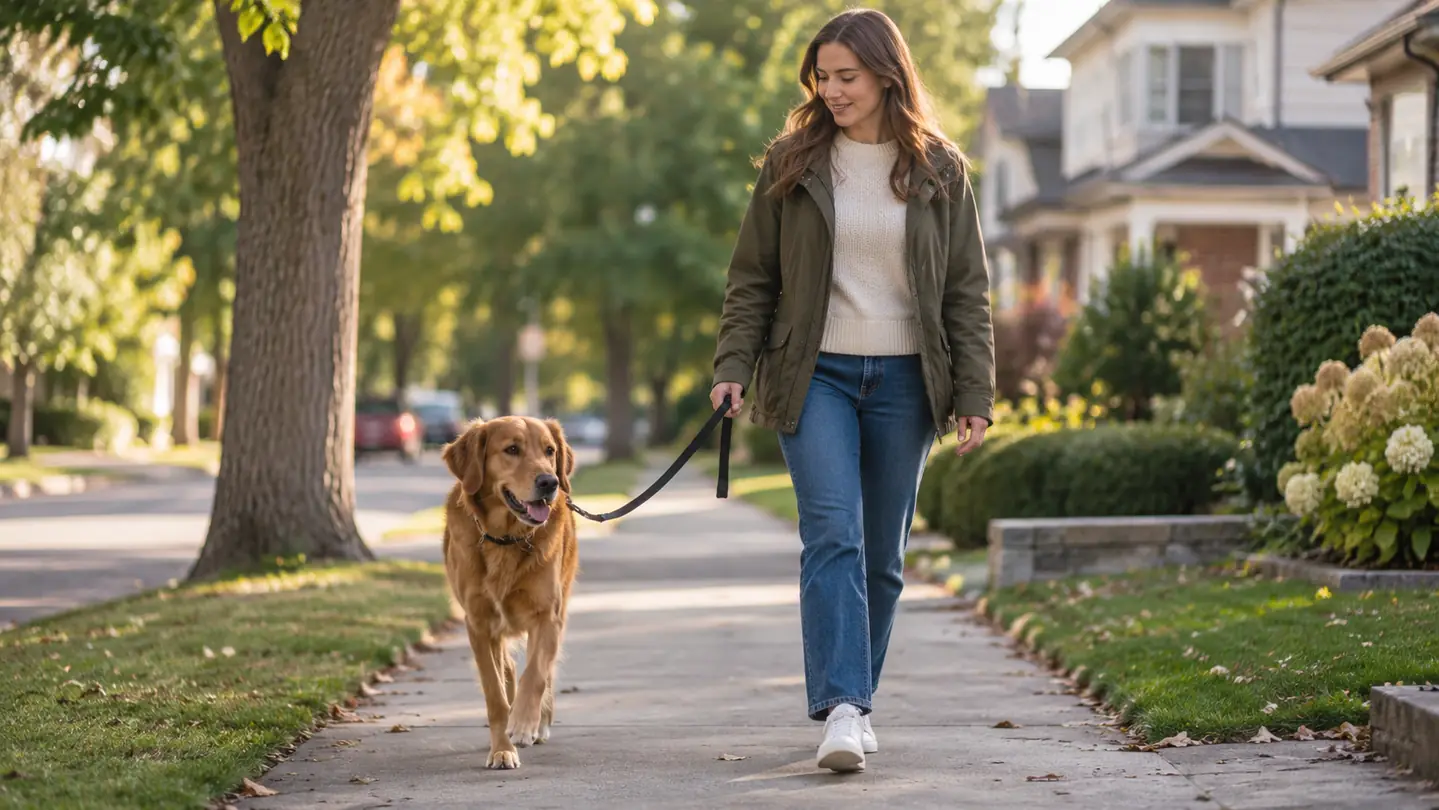
My dog June used to hit the end of the leash like she had somewhere to be. She is a 3-year-old mixed-breed rescue, about 48 pounds, adopted at 18 months with a pulling habit already set. I tried a standard back-clip harness. She leaned into it and kept going. I tried a slip lead for one walk, did not like how it felt in my hand, and put it away. The PetSafe Easy Walk was the first piece of gear that let me practice a loose leash instead of just surviving the block. I have used it on daily walks for months, and for a few weeks this spring on a shelter foster dog we were assessing. It is not an instant fix. It is a tool that made training possible for a dog who otherwise dragged me down the sidewalk.
June is the reason I care about this. She is strong for her size, easily excited by squirrels, and convinced that every walk is a race. The Easy Walk did not change her personality. It changed the physics of our walk enough that I could ask for a sit at the curb, reward her, and start again without being pulled off balance. That is the honest summary. The rest of this review is how the harness held up, where it helped, and where it still left work for me to do.
The Quick Verdict
A well-made front-attachment training harness for strong pullers in the 20 to 50 pound range. It gives you steering and a clear place to reward, but you still have to train the walk.
Amazon Check Today's Price →The harness that made our daily walk trainable, not a tug-of-war
The PetSafe Easy Walk puts the leash attachment at the chest and uses a martingale loop to discourage hard pulling. June still needed rewards and repetition. This just gave us a fighting chance.
Amazon Check Today's Price on Amazon →How I've Used It
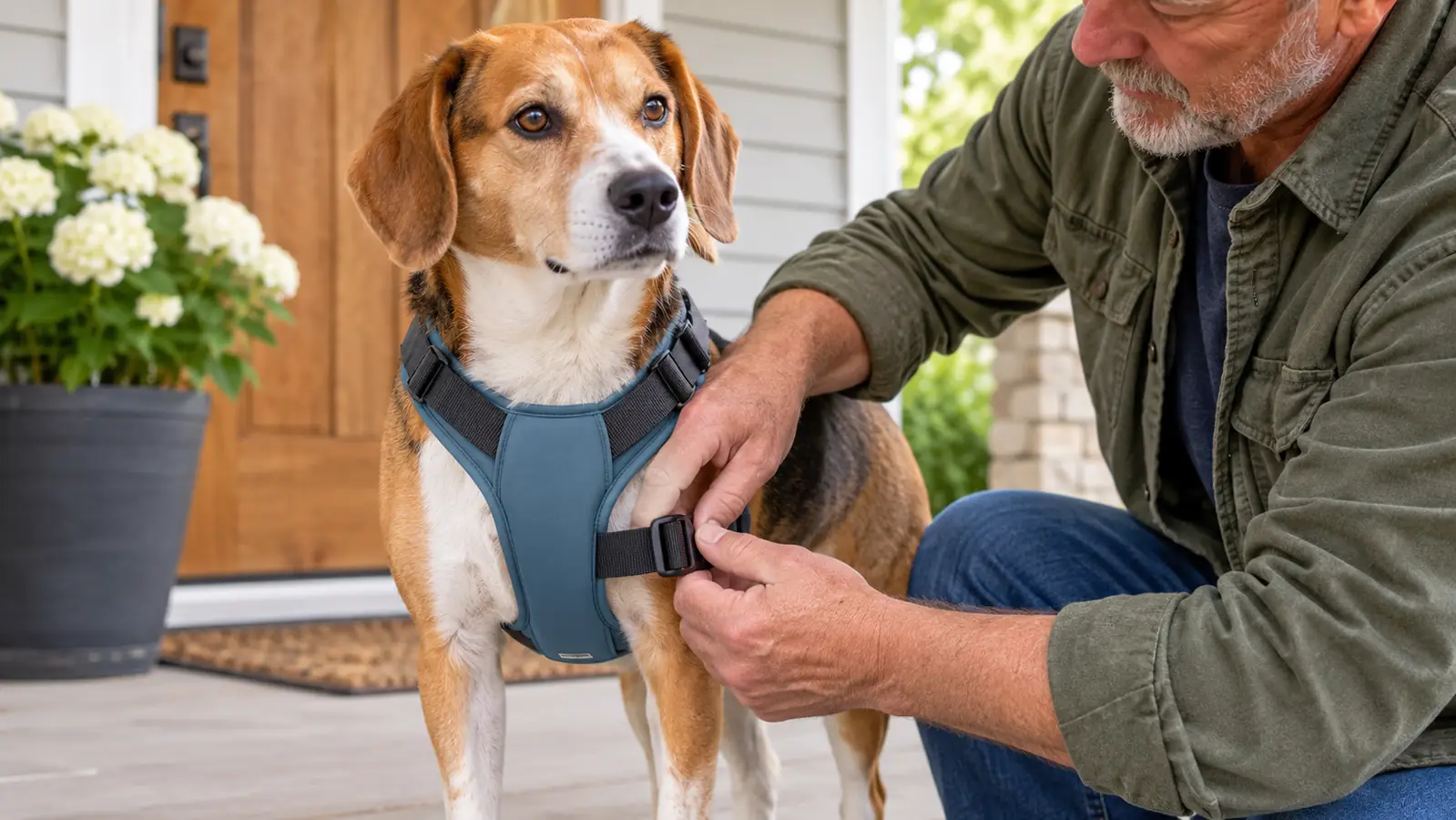
I walk June twice a day, about 10 minutes each time, and we do short training sessions with food rewards. The Easy Walk goes on before the front door opens. The medium size is listed for dogs from 20 to 50 pounds. June is 48 pounds, so she is near the top of that range. The quick-snap shoulder straps make it faster to put on than the over-the-head harness I used before. The belly strap is a different color from the rest of the harness, which sounds like a small thing until you are crouched on a porch in the rain trying to figure out which strap goes where. The harness weighs 3.88 ounces. It is nylon and hand wash only.
The first week was not instant. June still pulled toward the neighbor's fence and toward every dog we passed. What changed was the direction of her pull. With the leash attached at the chest, forward motion turned her toward me instead of letting her lean into the back. I rewarded her the second the leash went slack. We repeated that a hundred times. The martingale loop across her shoulders applies gradual pressure when she pulls, and it releases when she stops. I like that it does not rely on a jerk or a choke. I still had to teach her what I wanted.
After a month, our walks were calmer but not perfect. After three months, I could see the difference in my own hands. I was not bracing the leash with both arms. June was checking in more. The harness has held up to daily use, and I have hand washed it a few times. The one-year manufacturer warranty is there, though I have not needed it. The quick start guide was enough to get the fit close. I still adjusted the straps after the first few walks because a harness that starts loose will slide. Two dogs have worn this harness in my care: June and a shelter foster who stayed with us for a few weeks while we assessed her leash manners. The foster was smaller, and the medium adjusted down enough to fit safely. I would not guess at size if your dog is outside the 20 to 50 pound range.
What the Front Clip Actually Changes
Front-clip harnesses are not magic. They work by giving the handler a point of control at the chest instead of the back. When a dog pulls forward, the leash turns the dog's body toward the handler. That makes it harder to get full body weight behind the pull. The Easy Walk adds a martingale loop, which is the part that applies gradual pressure across the shoulders. The pressure is meant to discourage hard pulling, not to hurt the dog. June still pulled when she was over threshold. The harness just gave me a chance to interrupt the pull and reward a better choice. The Easy Walk was created by a veterinary behaviorist in 2004, and the design has been around long enough that most trainers recognize it.
The key word is practice. If I clipped the leash on and expected the harness to do the training, I would have been disappointed. The harness made it easier to reward the behavior I wanted. I carried treats. I stopped when the leash went tight. I turned and walked the other way when June locked onto a squirrel. The front attachment gave me leverage for those moves. It did not give me a dog who ignores squirrels. That is not a gear problem. That is a training problem, and it takes time.
Fit matters more with this design than with a back-clip harness. The medium is built for 20 to 50 pounds. June is 48, so she is close to the top. If she were much bigger, I would want a different size. The quick-snap straps and the different color belly strap help, but I still check the fit every week. A loose harness can slide to the side and put pressure where it should not. A tight harness can rub. I aim for snug enough that I can slip two fingers under the straps, no more. The snap closure has stayed put through months of walks.
Where It Helps Most: The Daily Walk
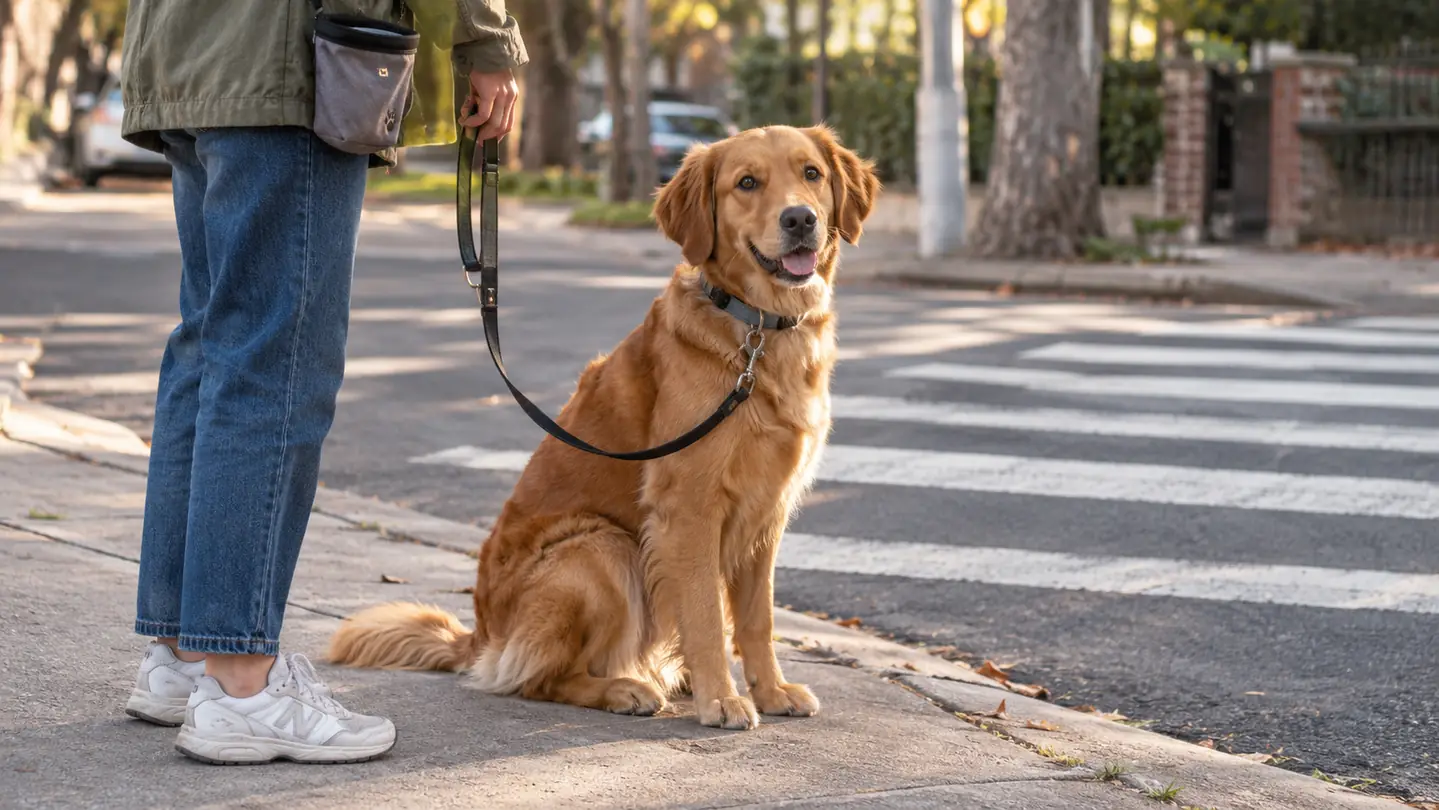
The biggest change was the walk itself. June used to launch out the door. With the harness on before the door opened, I could ask for a sit and reward it. The harness did not stop the door dashing on its own. It gave me a way to manage the exit so I could train the behavior I wanted. The same was true at the curb. I could stop, ask for a sit, and reward before we crossed. The chest attachment made it easier to keep June beside me instead of in front of me.
On busy sidewalks, the harness gave me more control without a lot of leash pressure. I keep the leash short but loose. When June pulled, I stopped. When she looked back, I rewarded. That loop is the whole training plan. The Easy Walk made the loop possible because I was not fighting her strength the entire time. I also used it on the foster dog during her assessment walks. She was a puller too, and the medium harness adjusted down enough for her. I would not call that a controlled test. It was just daily life, and it was enough to see the pattern.
Longer walks were fine once we got through the first ten minutes. June needs time to settle. The harness does not speed that up. It just keeps the early part of the walk from turning into a contest. On days when she was especially excited, I shortened the route and did more reward repetitions. On calm days, we walked farther. The harness was the same either way. The training varied, and that is what made the difference.
What I Don't Love
The leash can catch behind a front leg when the dog turns toward you. That happened to us a few times in the first week. It stopped when I kept the leash shorter and rewarded June on my left side instead of letting her wrap around me. It is not a reason to avoid the harness. It is a reason to pay attention while you both learn the new pattern.
The hand wash only care is a small annoyance. The harness is nylon, and it does pick up sidewalk grime. I rinse it in the sink and let it air dry. I would not put it in the washing machine. The one-year manufacturer warranty is normal for this kind of gear. I have not had a strap fail, a snap break, or a seam come apart. That is a good sign after months of daily use, but it is not a lifetime guarantee.
This is not a harness I would leave on all day. I use it for walks and training sessions. June wears it for the duration of the walk and then it comes off. The fit is snug enough that I would not want it on her while she is home alone. That is not a knock on the product. It is how I use a walking harness. If you want something for all-day wear, look for a different tool.
One more tradeoff: the harness gives you steering, not a brake. If your dog is already over threshold, lunging at another dog, the front attachment will turn the body but it will not calm the dog. I learned to keep more distance and reward before June got loud. The harness helped me manage the moment. It did not replace the work of changing her emotional response to other dogs.
How It Compares to a Back-Clip Harness
I still keep a back-clip harness for quiet sniff walks in the park. A back clip is fine when the dog is not pulling and you want an easy, comfortable fit. The problem is leverage. A dog can lean into a back clip and use its whole body to pull. The Easy Walk puts the attachment at the chest, so pulling turns the dog toward you. That is the difference in one sentence. It is not that one harness is good and the other is bad. They are different tools for different jobs.
For a dog like June, the chest attachment was the tool that made training possible. For a calm dog who walks politely, a back clip is simpler. I would not buy the Easy Walk expecting it to teach a dog to walk nicely on its own. I would buy it because it makes the daily practice less frustrating. That is what it did for us. Months later, I still reach for it on every walk that involves other dogs, squirrels, or the school pickup crowd.
What I Liked
- The chest attachment gives real steering without relying on a hard jerk
- The martingale loop applies gradual pressure and releases when the dog stops pulling
- Quick-snap shoulder straps and the different color belly strap make fitting easier
- The medium size fits the listed 20 to 50 pound range and adjusted down for a smaller foster dog
- The nylon build and snap closure held up through months of daily walks
Where It Falls Short
- It will not train a loose leash by itself
- The leash can catch behind a front leg while you both learn the new pattern
- Hand wash only, so it is not a toss-in-the-machine piece of gear
- The fit needs regular checking, especially on a dog near the top of the size range
The change was not that June stopped pulling. The change was that I could ask her to stop, reward her, and start again without being dragged.
Who This Is For
This is for everyday owners with a medium-sized dog in the 20 to 50 pound range who pulls on leash and needs a practical training tool. It suits positive-reinforcement households, people who will carry food rewards, stop when the leash goes tight, and practice short sessions. It also suits foster caregivers who need to assess leash manners without getting pulled down the street. If you want a harness that helps you teach a loose leash, the PetSafe Easy Walk is a good fit.
Who Should Skip It
Skip it if you want the harness to fix pulling without training. Skip it if your dog is outside the medium weight range, or if your dog is so reactive that a front attachment is not enough without a trainer. Skip it if you want an all-day harness, or if you will not hand wash gear. If you are not willing to carry treats and repeat the same lesson, the Easy Walk will feel like a failed product. It is not. It is a tool that needs a handler.
A front-attachment harness is only useful if you use it every walk
The PetSafe Easy Walk gave June and me a workable way to practice loose-leash walking. It will not train your dog for you. It will make the daily repetitions easier.
Amazon Check Today's Price on Amazon →