
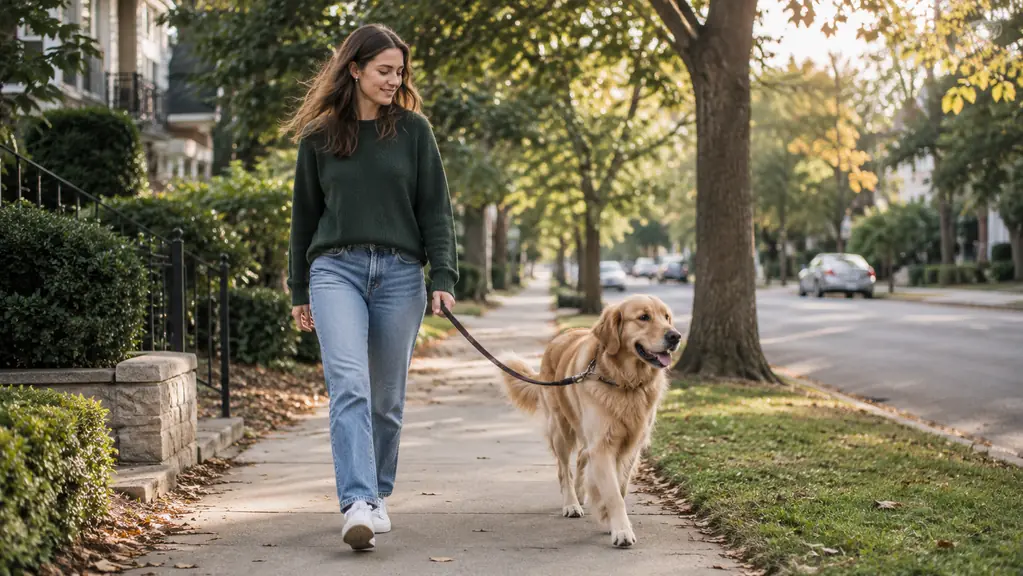
The first time I clipped the leash to the front of June's harness instead of her collar, she took three steps, stopped, and looked back at me like I had rearranged the living room. She was not pulling. She was not choking. She was just thinking about it. That was the moment I understood what people had been telling me for two years.
June is a 3-year-old mixed breed rescue, about 48 pounds. We adopted her at 18 months and she came with a list: leash pulling, door dashing, barking at the front window. I am not a trainer. I am a school office manager outside Wichita who volunteers walking and fostering dogs for a small shelter. A friend who fosters handed me her PetSafe Easy Walk Harness about a year before I bought one of my own, and I nodded politely and put it in a drawer, because I was sure the problem was my dog and not my gear.
For the first year I used a flat collar and then a standard back-clip harness. The back-clip harness honestly made things worse. A dog who pulls from the shoulders can lean into that back clip and put her whole body into it, and June worked that out in about a week. I did the food rewards. I did the stop and turn around. I did ten minutes twice a day in the driveway. All of it helped a little, and none of it helped on the first two blocks when she was excited.
The harder version of the problem was that I am often walking two dogs at once. Shelter dogs come through our house for a few weeks at a time, and a foster dog on one arm plus June on the other is how I ended up with a sore shoulder and a bad attitude about walks. When you have two leashes and one pair of hands, you cannot do careful training in the moment. Some of the work has to come from the gear.
That is why I finally bought the PetSafe Easy Walk Harness. It is a front-clip harness, which means the leash attaches at the chest instead of the back. When June surges forward, the clip at her chest pulls her to the side and she ends up facing me instead of the horizon. It is not a fix on its own and it does not train her. What it does is interrupt the pull long enough for me to ask for something else.
Two weeks in, I could hold the leash in one hand and the treat pouch in the other. That is the whole review.
The gear change that ended the arm-wrestle on our block
Same dog, same sidewalk, same ten-minute sessions. The only thing that changed was where the leash clips on.
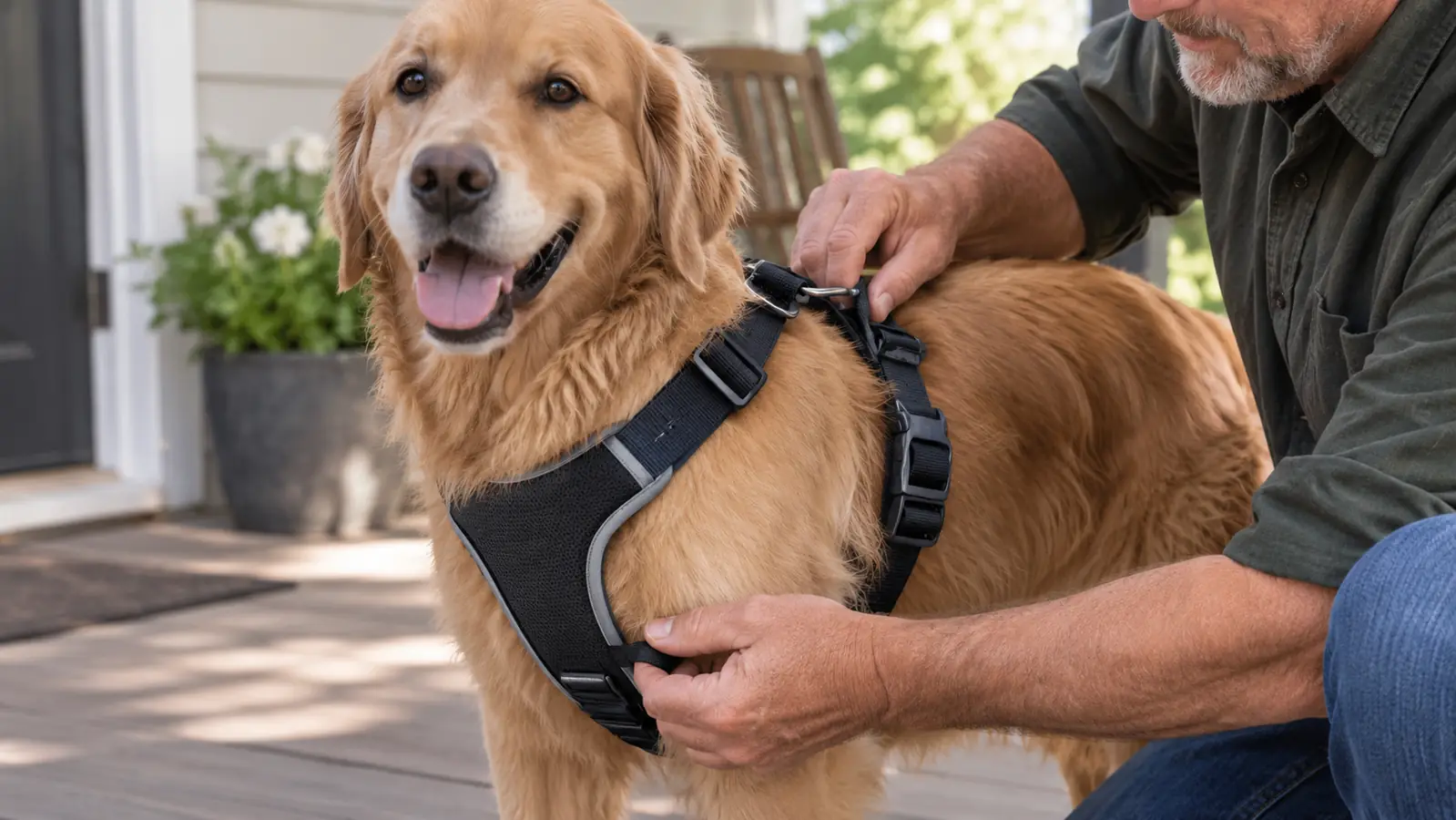
Amazon Check Today's Price on Amazon →Fit matters more than anything else with this harness. It comes in sizes, and June at 48 pounds sits at the very top of the medium range, which is 20 to 50 pounds. The quick-snap shoulder straps and the belly strap are what you adjust, and the belly strap is a different color from the rest of the harness, so I can see at a glance which piece goes underneath. The first week I had it a little loose and it slid off to one side. Snug, with room for two fingers under the chest strap, is what finally worked.
The martingale loop at the front is the part doing the work. It puts gradual pressure across the shoulders when she pulls and eases the second she stops, so there is nothing pressing on her when she is walking politely. The design came from a veterinary behaviorist back in 2004, and there are more than 48,000 reviews sitting at 4.3 stars, which tells you it fits a lot of dogs and not every dog. Mine is one of the ones it fits.
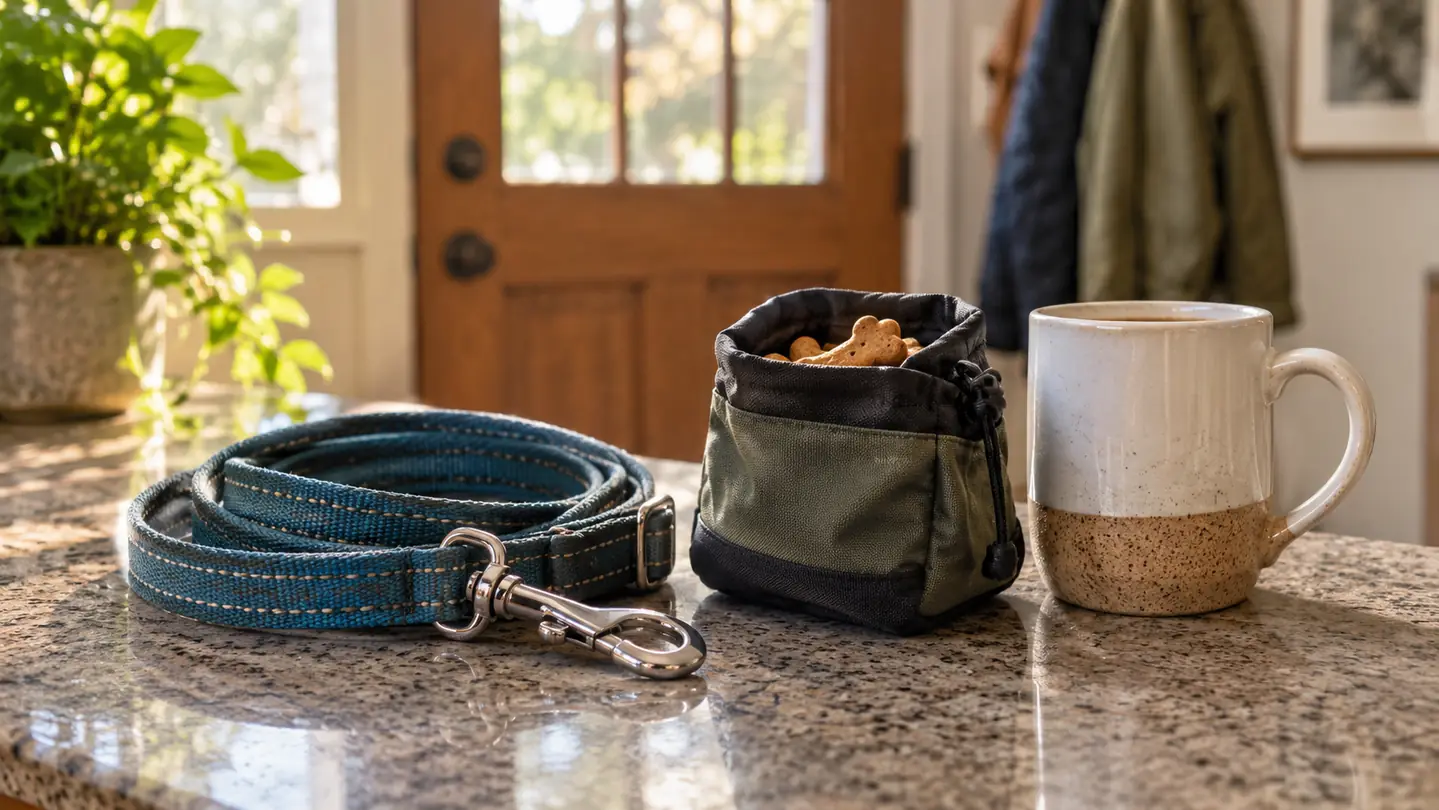
What it does not do: it does not stop a determined dog from lunging at a squirrel, it does not fix door dashing, and it does not replace the ten-minute sessions with food rewards. I still carry the treat pouch. I still stop when the leash goes tight. The difference is that the harness now buys me two seconds to redirect her, and two seconds turns out to be the whole game.
Two practical notes from a year of daily use. The harness is nylon and hand wash only, and after one muddy spring I understood exactly why the instructions say that. And if your dog is a chewer, do not leave it on in the house. A harness on a bored dog is a chew toy with straps, and I learned that one the expensive way.
I also want to be honest about the first week, because nobody was honest with me. June walked sideways. She shot me looks. She got a large number of treats for standing still in a driveway going nowhere. By day ten she was walking to the door when I picked the harness up, and that is the only review metric I actually trust.
The two-dog walks are what sold me for good. With a foster dog on my left and June on my right, both in front-clip harnesses, I can hold both leashes in one hand and keep my other hand free for treats. It is not a peaceful parade. It is, however, a walk instead of a wrestling match, and after two years of wrestling matches I will take it.
What I'd Tell You If We Were Sitting at My Kitchen Table
I would tell you to buy the harness, and I would tell you not to expect it to fix your dog. The PetSafe Easy Walk is a tool that makes a loose leash physically easier for a dog who is still learning, and easier means you can practice more often without losing your temper. That is the whole mechanism. The training is still yours: the food rewards, the short sessions, the stopping when the leash goes tight, the ten minutes twice a day even when it is cold. If you are not willing to do that part, the harness will just be a strap your dog drags you around in. If you are willing to do it, this thing will meet you halfway on the blocks where your dog is too excited to hear you. Measure your dog's chest before you order, start snug rather than loose, and give it two weeks before you decide. Ours took about ten days, and June is not an easy dog.
Start with the fit, not the pulling
Measure the chest, pick the size, and give it two weeks of short reward-based walks. That is the whole plan.
Amazon See the PetSafe Easy Walk Harness on Amazon →