
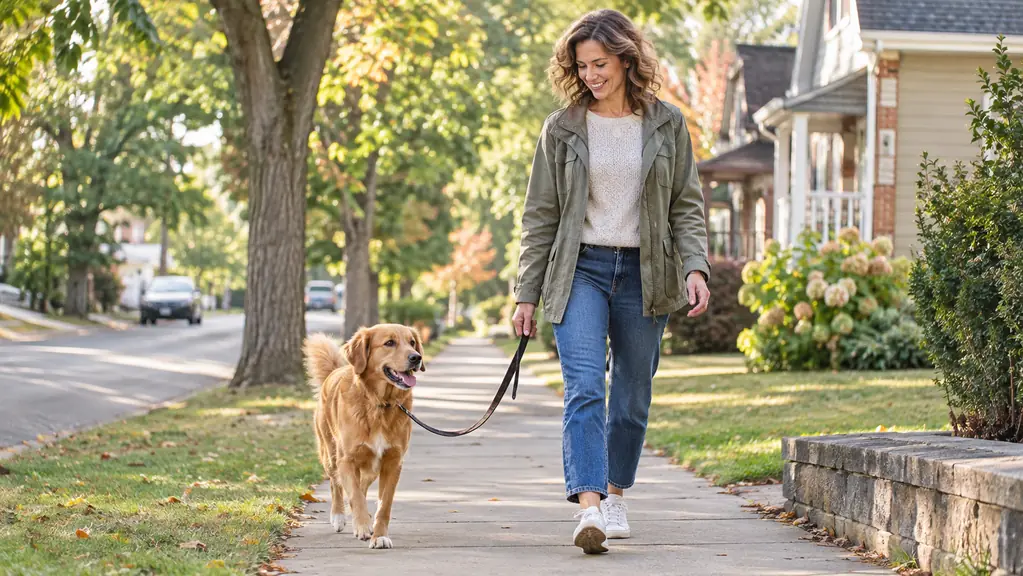
June came home at 18 months old with a strong opinion about sidewalks. She is a 3-year-old mixed-breed rescue, about 48 pounds, and when she saw a squirrel her whole body leaned into the leash. I tried a flat collar and a back-clip harness. Both gave her something to pull against. What changed our walks was not a special piece of gear. It was a front-clip harness plus short reward-based sessions. The PetSafe Easy Walk Harness is the one I used with June, and it made the training moment easier to see.
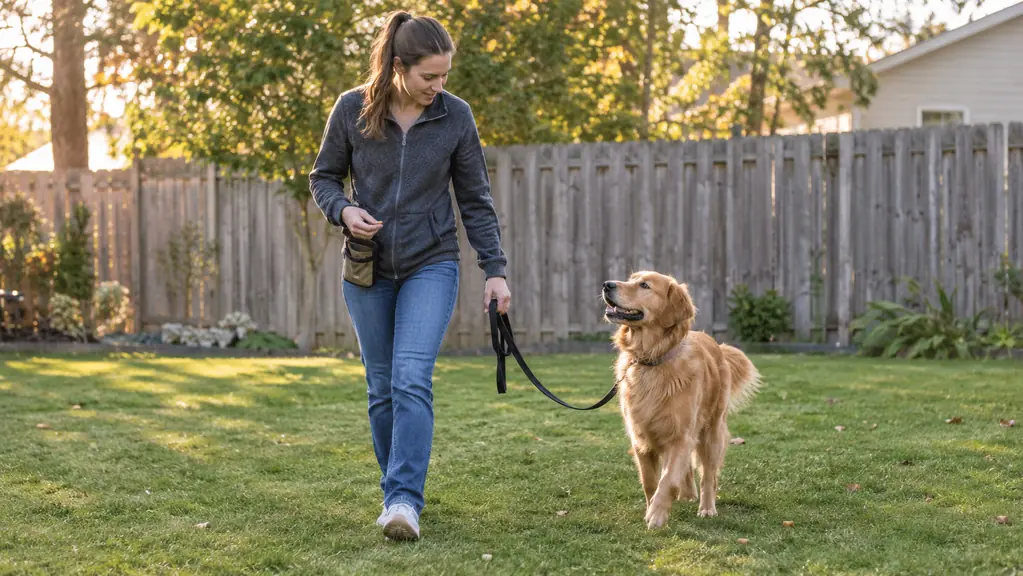
I am not going to tell you a harness will train your dog for you. June still needed treats, repetition, and a plan. I train with food rewards in two 10-minute sessions a day, usually in our fenced backyard outside Wichita before we try the sidewalk. The harness is a tool that makes consistent training easier. Here are ten reasons a front-clip harness helps with leash pulling, and what that looked like for us.
The harness that made slack leash moments easier to catch
June still needed treats and repetition. The PetSafe Easy Walk Harness gave me a clearer training window. It is listed for dogs from 20 to 50 pounds and has quick-snap shoulder straps.
Amazon See the PetSafe Easy Walk Harness on Amazon →It redirects forward motion instead of feeding it
When a dog pulls in a back-clip harness, the leash pulls from behind and the dog can lean into it. A front-clip harness changes that angle. When June surged toward a smell, the attachment at her chest turned her shoulders slightly toward me. She did not get yanked. She got redirected. That small arc gave me half a second to reward her for turning back. Over weeks, that half second mattered more than any correction I could have given.
It makes a slack leash easy to notice
The hardest part of loose-leash training is timing. You have to reward the exact moment the leash goes slack. With a front-clip harness, that moment is visible. The leash drops, June's shoulders soften, and I can mark it with a yes and a treat. The PetSafe Easy Walk Harness did not create the slack by itself. It helped me catch the slack when it happened, which is the part I kept missing. I practiced that catch in our yard before I asked for it on a busy sidewalk.
It interrupts the pulling cycle earlier
Pulling is a loop. The dog leans, the harness tightens, the dog pulls harder, and the walk turns into a tug-of-war. A front clip breaks that loop sooner. When June started to lean, the pressure came across her chest and turned her. She had less chance to brace and dig in. I could then stop, wait for her to look back, and reward the choice. The earlier I could interrupt the loop, the less frustrated we both got. A calmer start made the next repetition easier.
It gives you a gentle steering aid in real life
Training in a quiet yard is one thing. A delivery truck, a barking dog behind a fence, and a discarded food wrapper are another. The PetSafe Easy Walk Harness has a Martingale loop that puts gradual pressure on the shoulders, according to the maker. I used that gentle pressure to guide June away from a distraction, not to jerk her. Then I rewarded her for coming with me. The harness bought me a second to think, and that second kept me from yanking.
It fits June's weight range without a custom order
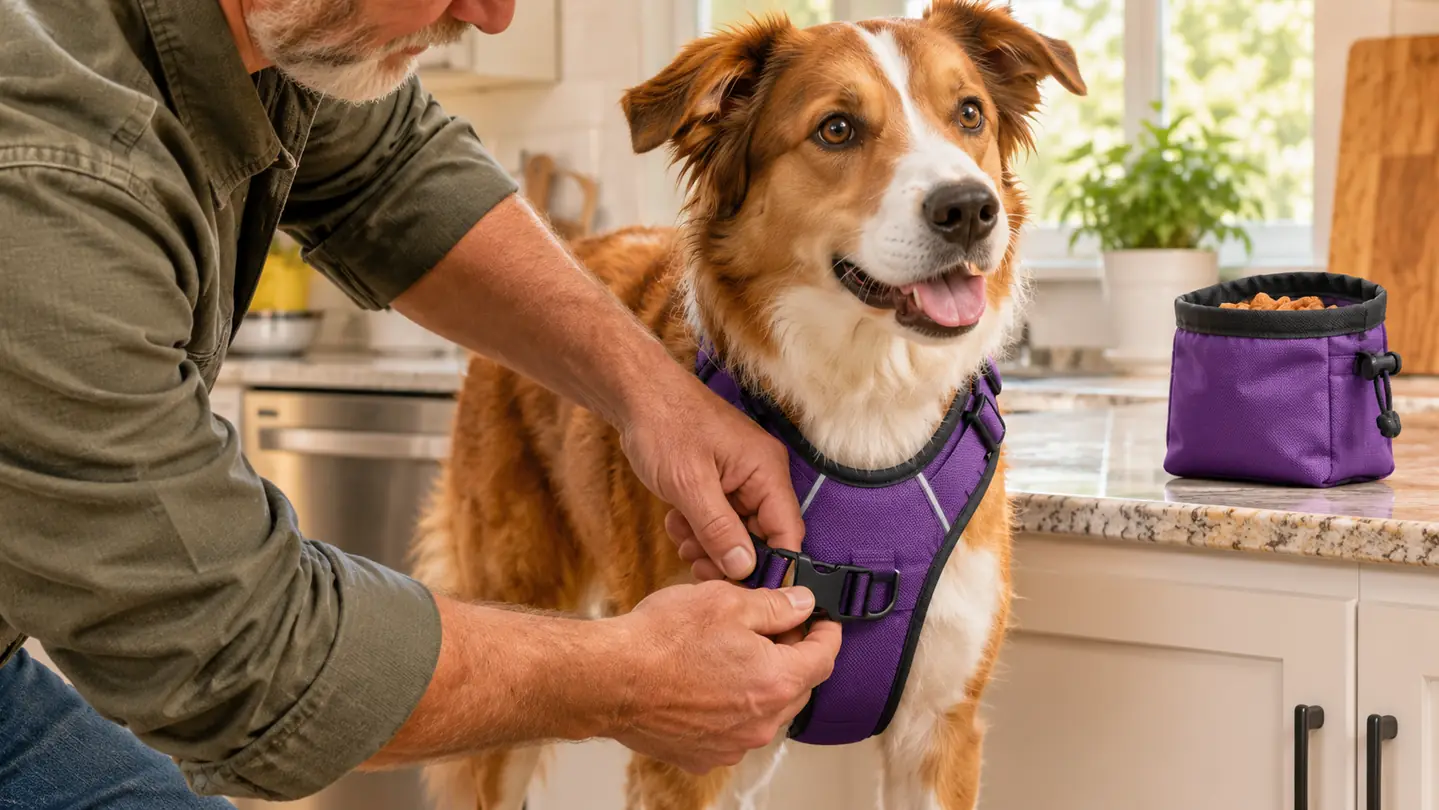
June is about 48 pounds. The Medium size is listed for dogs from 20 to 50 pounds, so she is near the top of that range. The quick-snap shoulder straps and belly strap let me adjust it so it sat snug but not tight. A loose harness can rub, and a too-tight one is not fair to the dog. I checked the fit with two fingers under the straps and rechecked it after a few walks. The Medium has been the right size for her.
It is quick to put on, so you will actually use it
Training only works if the gear gets used. The PetSafe Easy Walk Harness has quick-snap shoulder straps and comes with a quick start guide. I can put it on June in the mudroom without a wrestling match. That matters on a rainy Tuesday when I am tired and she is already spinning by the door. The harness is hand wash only, so I rinse it and let it air dry. It also carries a one-year manufacturer warranty. Easy gear means fewer skipped sessions.
It pairs with treats instead of replacing them
Some no-pull tools work by making pulling uncomfortable. I do not use those. I want June to choose the loose leash because it pays. The front-clip harness makes that choice possible. When she hits the end of the leash, I stop. When she turns back, I mark and reward. The harness is not a punishment. It is a way to make the right choice easier to practice. That is the whole training philosophy in our house: reward what you want, and make the wrong choice less rewarding.
It lowers the temperature on both ends of the leash
Being dragged across a parking lot makes me short-tempered. I do not want to train a dog while I am frustrated. A front-clip harness gave me more control, which helped me stay calm. When I stayed calm, June stayed calmer too. I could ask for a sit at the curb instead of wrestling her into one. The gear did not fix her behavior. It made the training session less of a fight, and that made me a better trainer.
It helps in tight places like the vet lobby
June is friendly but excitable, and a small vet lobby is a lot to ask. With a front-clip harness, I can keep her close without choking her. I ask for a sit, reward the sit, and feed treats while we wait. The harness gives me a way to guide her away from the reception desk without a scene. The same works at a farmers market, a cafe patio, or the narrow aisle at the pet store. Practice in easy places first, then try harder ones.
It supports a simple plan you can repeat twice a day
Here is the routine that worked for us. Ten minutes in the morning, ten minutes in the evening. I load treats, put on the PetSafe Easy Walk Harness, and walk in the yard. I reward June for staying near me. If the leash goes tight, I stop and wait. If she turns back, I reward. We do not practice when I am rushed. The harness makes the repetitions possible, but the repetitions do the teaching. After a few weeks, her default was a looser leash more often.
What I'd Skip
I would skip any promise that a harness alone will stop pulling. I would also skip a retractable leash for training, because it teaches a dog that tension equals more freedom. Skip tightening the harness until it is uncomfortable, and skip a back-clip harness if your dog is a serious puller and you have not taught a loose leash yet. The PetSafe Easy Walk Harness is a tool, not a finish line. It helped June, and it made my training more consistent. That is the honest version.
If your dog has shoulder problems, a recent injury, or hates straps near the chest, talk to your vet or a force-free trainer before you buy. Fit matters more than the label. A harness that rubs or restricts movement will make training harder, not easier. June needed a few short walks to get used to the straps, and I kept the sessions easy while she adjusted. Go slower than you think you need to.
The harness did not teach June to stop pulling. It made the moment I wanted to reward impossible to miss.
Start with short sessions and a pocket of treats
The PetSafe Easy Walk Harness fits 20 to 50 pound dogs and gives you a front-attachment tool for reward-based leash training. Pair it with two 10-minute sessions a day and reward the slack.
Amazon See the PetSafe Easy Walk Harness on Amazon →