
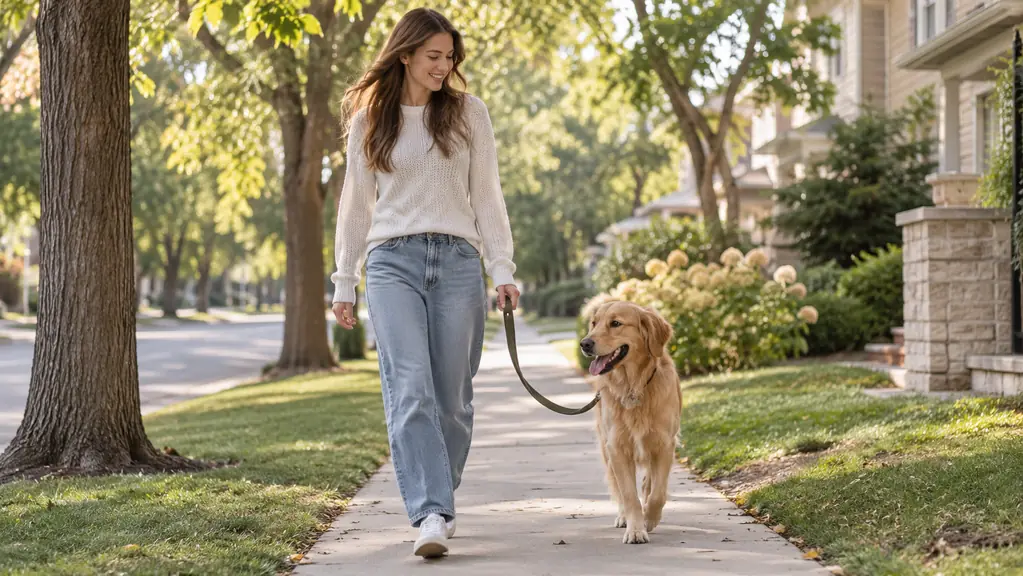
The first thing I noticed about the PetSafe Easy Walk was not the pulling. It was the quiet. June is a 3-year-old mixed-breed rescue, about 48 pounds, and she came to us at 18 months already certain that every walk was a race she was losing. Our first mile in the Easy Walk took eleven minutes and my shoulder did not ache when we got home. That is the honest headline, and it is also where most reviews stop. The rest of this is the part I wish someone had handed me before I ordered, because the harness is a genuinely good tool and it is not the tool a lot of people think they are buying.
I have walked this dog on a flat collar, on a back-clip harness, and on a head halter, and I have opinions about all three. What I will not do is pretend a piece of nylon teaches a dog anything on its own. I am Renee, a school office manager outside Wichita who volunteers walking and fostering for a small shelter, and I train with food and two short sessions a day. The Easy Walk is a management device. It makes a hard walk manageable long enough for the training to land. Go in expecting that and you will like it. Go in expecting your dog to stop pulling because you spent money, and you will be writing one of the angry reviews.
The Quick Verdict
A solid management tool that buys you a calm enough walk to actually teach loose-leash skills. The fit gets fussy near the top of a size, and it will not fix a fearful or lunging dog.
Amazon Check Today's Price →The harness that bought us our first calm mile
June is 48 pounds and pressed against the ceiling of the Medium range. If your dog measures in the middle of a size, this is an easier call than it was for us.
Amazon Check Today's Price on Amazon →What Nobody Tells You Before You Order It
It is not a no-pull harness in the way the name suggests. The pull still happens. What changes is where it goes. When June hits the end of the line, the martingale loop across her chest eases tighter and turns her toward me instead of away from me. She is still pulling. She is just pulling in a slow arc back toward the person holding the leash, and that arc is the moment I have been waiting for all along, because that is when I can mark the behavior and hand over a piece of chicken.
Before the Easy Walk I was using a back-clip harness, the vest kind, and I want to be fair about why it failed us. A back clip gives a strong dog a solid anchor and gives the handler nothing. On a Tuesday in March, June spotted a squirrel across a neighbor's driveway, hit the end of the line at a run, and the vest rotated around her ribs until the clip sat under her chest. She backed out of it in about two seconds and spent ten minutes touring the block while I jogged after her in work shoes. None of that was the harness's fault exactly. It simply had no way to turn her. The Easy Walk does, and that is the whole difference between the two designs.
The second thing nobody tells you is that the fit decides everything, and the fit is fussier than the product photos suggest. PetSafe sizes the Medium for dogs from 20 to 50 pounds. June is 48. She is inside the window on paper and pressed against the ceiling of it in practice, which left the adjustment straps with almost nothing spare. A dog at the bottom of a size range and a dog at the top of the same range are wearing the same harness on paper and very different harnesses in real life. If your dog measures anywhere near 48 or 50 pounds, look hard at the girth measurement before you order.
The third thing is that the harness does nothing at all about the rest of your dog. June's door dashing and her window barking were untouched by it. Those are separate skills with separate plans. I say that plainly because I have read plenty of reviews from people who expected a chest strap to stop their dog from losing its mind at the mail carrier, and then blamed the strap.
How the Martingale Loop Actually Feels on a Walk
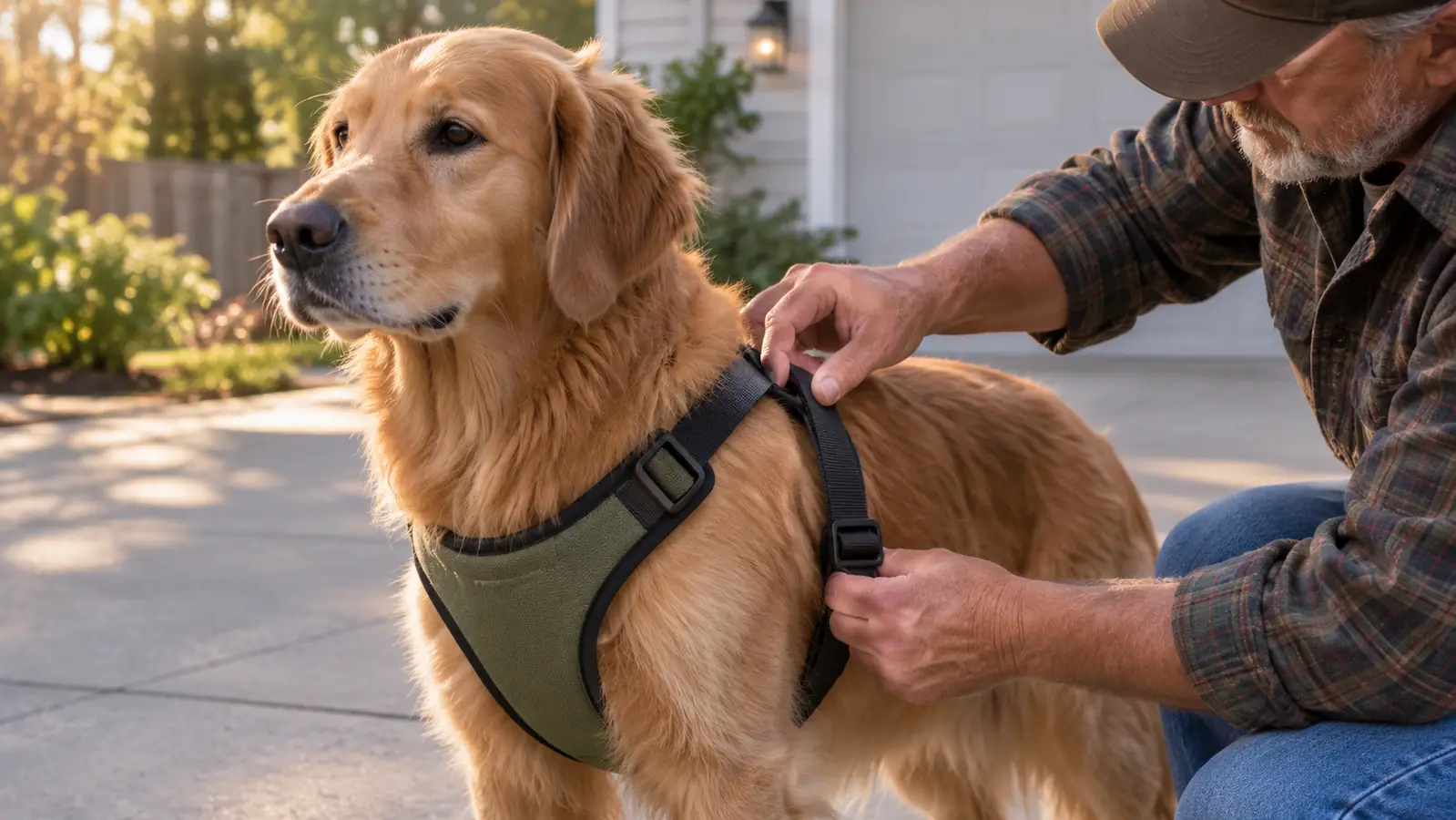
The design has been around since 2004 and came from a veterinary behaviorist, which is part of why I was willing to try it on a dog who had already defeated two other setups. The loop sits across the chest and the leash attaches to it. On a normal stretch of walking with slack in the line, nothing is happening. The strap is resting there and June is sniffing a mailbox. The pressure only arrives when she loads the leash, and it eases the instant she gives it back. That gradual give and take is the whole mechanism, and it is why the harness is quiet when your dog is quiet.
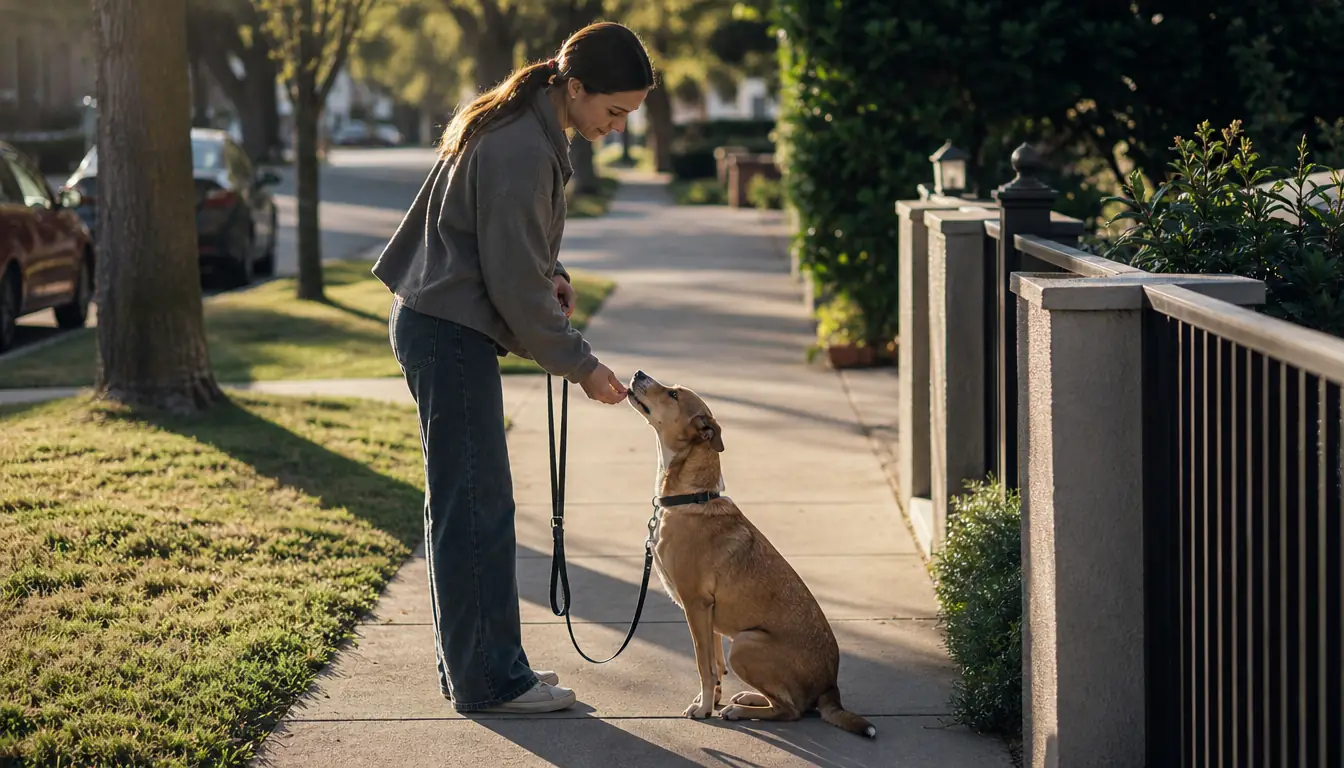
From my end, what that feels like is a dog who cannot get her full body weight behind a lunge. She turns. I reward the turn. Somewhere around the third week the turn started happening before she reached the end of the line, which is the only thing I actually wanted out of this purchase.
From her end, it is a strap across the chest instead of a strap across the throat. That difference mattered for June. On a flat collar she coughs and pulls harder. The chest pressure does not frighten her and it does not shut her down. If your dog is the type who freezes or folds under any pressure at all, that is a different conversation, and honestly a different tool.
The harness did not stop June from pulling. It turned the pull into a check-in, and a check-in is something I can reward.
How I Tested It With June
We did short sessions, about ten minutes, twice a day, on the same two blocks of sidewalk so I could compare one walk to the next instead of guessing. I kept the leash loose, rewarded every check-in, and ended the session early when she got tired or the sidewalks got busy. The first two weeks were clumsy. The harness shifted, I fussed with straps on the driveway, and June gave me the flat look a dog gives you when you have clearly lost the plot.
I also kept a tally in a spiral notebook on the hall table, which sounds more disciplined than it was. Mostly I wrote a number and a weather note. March 14, twenty two check-ins in ten minutes, drizzle, and she would not stop sampling the curb. April 2, thirty one in the same ten minutes, sunny, and four of them came before she reached the end of the line. That notebook is the only reason I trust the change was real and not me getting used to the pulling.
The quick-snap shoulder straps made it easy to get on and off, especially with a dog who is already vibrating at the sight of the leash. But easy on also means easy to get slightly wrong, so I checked the fit on every single walk for the first month. A harness that shifts will rub, and a rub on a dog with a thin coat turns into a sore spot fast.
By week four the loose stretches were longer than the tight ones. By week six I could walk her past a barking dog behind a fence with one hand in my pocket. She still pulls when a rabbit breaks cover. She is a dog. I would rather tell you that than sell you a fantasy about a chest strap that solved everything in a weekend.
One more thing worth knowing: the harness is light, right around 3.88 ounces, so it did not change how she moved on a long sniff walk. I have used heavier gear that made a dog walk like it was wearing a backpack, and this is not that.
What I Liked
- Turns a hard pull into a turn back toward you, which is a trainable moment
- Light enough that it does not change how the dog walks
- Quick-snap shoulder straps and a belly strap in a different color make it easy to orient correctly
- Backed by a one year manufacturer warranty
- Has held up through months of daily walks in Kansas weather
Where It Falls Short
- Very little adjustment left for a dog near the top of a size
- Straps can rub on thin-coated or sensitive dogs
- Hand wash only, so it does not go in the machine
- Does nothing for door dashing, barking, or jumping
- Not the right pick for a dog who panics in a harness
The Fitting Details That Decide Whether It Works
PetSafe sizes on weight, and weight is a rough proxy at best. A deep-chested 40 pound dog and a barrel-chested 40 pound dog do not wear the same harness well. Measure the widest part of the ribcage behind the front legs and compare that number to the size chart before you order anything. It takes two minutes and it saves a return and a month of wondering why your dog hates the gear.
I measured June on the kitchen floor with a cloth tape from my sewing box: 27 inches around the widest part of her ribcage, right behind the front legs, and 13 inches from the base of her neck to the middle of her chest. Both numbers are written inside the cover of the notebook, and I recheck them every couple of months, because a dog's shape changes with the season and with how generous I have been with the treat pouch. By midwinter she was an inch wider around than she had been in the fall, and that inch was the difference between a harness that sat still and one I was adjusting twice a block.
The belly strap on the Easy Walk is a different color from the rest of the harness on purpose. It goes underneath. Getting that piece wrong is the most common reason a harness rubs, and it is the reason the quick start guide in the box is worth the ninety seconds it takes to read on the kitchen floor before your first walk.
Check the shoulder straps after every walk for the first couple of weeks. If you can slide more than two fingers under a strap, it is loose enough that a determined dog can back out of it. If the strap is leaving a crease in the coat, it is too tight. I keep mine snug enough that it stays put and loose enough that June can breathe through a full sniff of something disgusting.
The material is nylon and the care instructions say hand wash only. I rinse mine in the sink with a little dish soap every couple of weeks, hang it over the porch rail, and it is dry by the next walk. If you are the type to throw gear in the machine, put a reminder on your phone now instead of finding out later.
Where It Falls Short
Rub points are real. The first week June had a small pink line behind one shoulder where I had the strap a notch too tight. I moved it one hole, the line faded in two days, and it never came back. But if your dog has thin skin or a short coat, plan on checking underneath the straps after every walk for a while, and do not leave the harness on in the house where it can shift while the dog lies down.
The rub came back on a wet week in May, which is the detail I wish someone had put in a review for me. A damp strap against a damp coat behaves differently than a dry one, and after four rainy walks in a row I found the same pink line behind her left shoulder. I started toweling the straps dry when we came in and letting that side out one hole for wet walks, and it did not return. Small thing, but it is the kind of small thing that becomes a sore spot if you ignore it for a month.
The bigger limitation is behavioral. This harness manages the walk. It does not teach a dog to walk politely on a loose leash, and it does not touch anything that happens indoors. If June hears a delivery truck, the Easy Walk hanging by the door is irrelevant. I still do the door work and the window work separately, with food and reps and a lot of sitting around waiting for her to offer the behavior I want.
And it is not a fit for every dog physically. A dog with an old shoulder injury, a dog recovering from surgery, or a dog who is already uncomfortable in any harness should get a vet's opinion before you add chest pressure to the equation. That is not a knock on the product. It is the honest boundary of what a chest-led harness does, and it is the reason I would never tell a stranger to just order one and see.
Who This Is For
This is for the everyday owner with a medium dog who pulls hard enough that walking stopped being fun. If your dog is somewhere in that 20 to 50 pound window and you are willing to do ten minute sessions with food twice a day, the Easy Walk gives you the calm stretch of sidewalk you need in order to practice. It also suits the owner who wants a tool designed by a veterinary behaviorist and already tested by a lot of other people before it reached your porch. It is simple gear for a simple job, and the job is buying yourself enough quiet to train.
Who Should Skip It
Skip it if your dog falls outside the weight range, and skip it if your dog sits right at the ceiling of a size with a deep chest, because you will run out of strap before you run out of dog. Skip it if you want the pulling solved without changing anything about your daily routine, because no harness does that. Skip it if your dog panics in gear, backs out of straps, or has a shoulder or neck history your vet has flagged. And if your dog is lunging and barking at other dogs on every single walk, talk to a trainer or a behaviorist first. That is a different problem, and a chest strap is not the answer to it.
Good gear, honest limits, a calmer walk
The Easy Walk did not fix my dog. It made the walk quiet enough that I could do the fixing, and for a dog like June that was the whole battle.
Amazon Check Today's Price on Amazon →What I Would Tell You at the End of the Block
The PetSafe Easy Walk earns its place on the hook by my door. It is the harness I reach for when I want a normal walk instead of a training project, and it is the harness that got June and me through the months when every walk felt like a negotiation with a dog who outweighed my patience. It is not magic. It is a well designed piece of nylon that changes where a pull goes, and that small change is what made training possible for us.
If you buy one, measure your dog first, read the little guide in the box, check the fit on every walk for two weeks, and keep a bag of good treats in your pocket. The harness handles the pulling. The treats handle the dog. Do both and you will get where you are trying to go.