
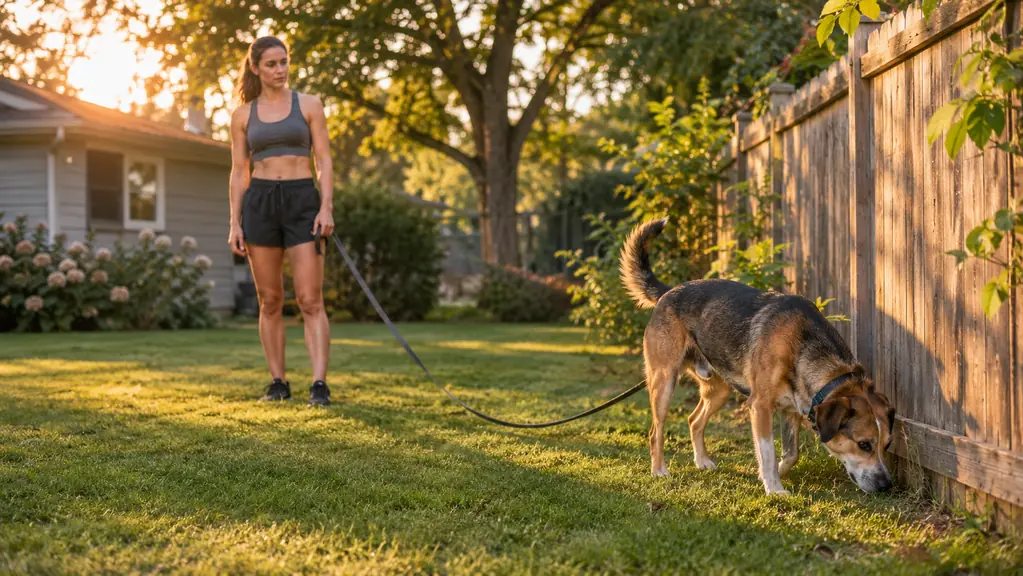
June's recall was flawless in my kitchen. Eight feet away, a piece of chicken in my hand, she came every single time. Then I walked her to the back corner of the yard where the fence meets the alley, and thirty feet of open grass turned my trained dog into a dog who had never heard the word come in her life.
She is a three year old mixed breed rescue, about 48 pounds, adopted at 18 months with a list of habits I did not create. Pulling, door dashing, barking at the window. Recall was the one I cared about most, because a dog who does not come back is a dog who cannot be safe. What changed it was not a new command or a louder voice. It was distance. A Hi Kiss training lead, the 30 foot one, gave me room to practice recall where it actually fails. Here are ten reasons that long lead built the recall my short leash never could.
The Recall You Want Happens at 30 Feet, Not 6
A 30 foot nylon lead with a swivel snap, sized for a medium dog. Enough line to practice recall in the yard you actually have.
Amazon Check Today's Price on Amazon →It puts real distance between you and the dog
My kitchen is maybe eight feet across. June could nail a recall there all day long, and it meant nothing. A 30 foot lead stretches the same exercise across the whole backyard, so the dog practices the real version instead of a scaled down one. Start at ten feet and add five feet each week. That progression did more for us in a month than three months of kitchen reps.
It lets the dog choose to come instead of being towed
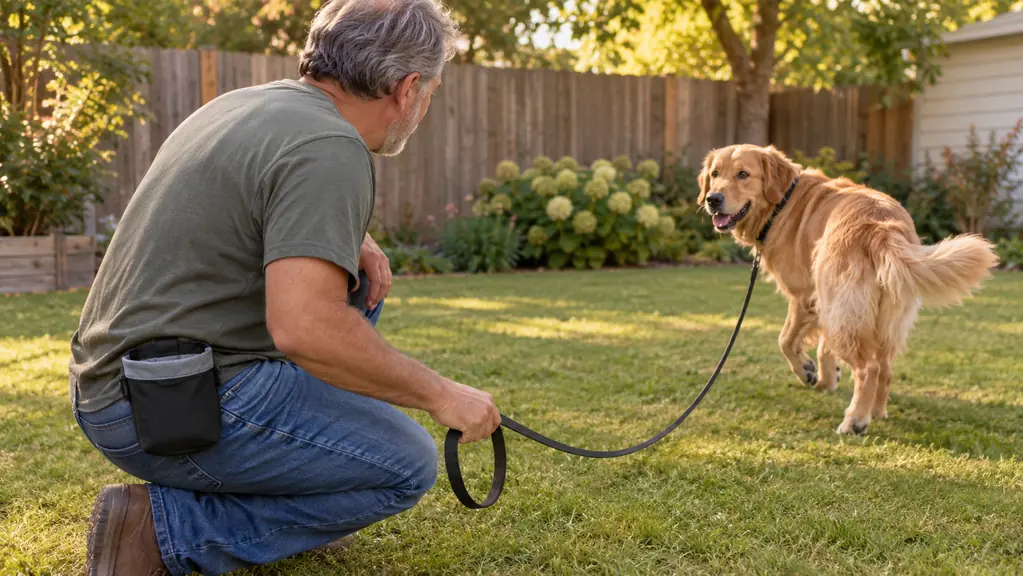
On a six foot leash, a recall is often something you do to the dog. You step toward them, they have nowhere else to go, and the leash quietly does half the work. On a long line you stand still and let the dog decide, then pay for the decision. June worked out within two sessions that turning around paid better than continuing to sniff. Her choice, not mine, and choices stick.
You can pay the dog the second she turns
Reward timing is the whole game. If the food lands four seconds after the turn, you reinforced something else entirely. With the line looped in my hand and treats in a pocket, I can mark and pay the instant she turns. The Hi Kiss lead keeps that connection while she is far enough away for the choice to be genuine. It is the only gear I have found that makes that timing possible at distance.
You finally get to practice around the good smells
Sniffing is the strongest distraction most dogs have. A tree at the back fence, a spot where the neighbor's dog walks, a wrapper in the leaves. On a short leash you avoid those places and the training stays easy. On a long lead you walk right into them and get to rehearse a recall in the hardest moment, which is the only moment that counts. One hard sniff per session, then end on a win.
The 3/4 inch nylon is kind to your hands
June is 48 pounds and not gentle when something startles her. The lead is 3/4 inch nylon, wide enough that it does not cut into my palm when she hits the end of it, and durable enough that wet grass has not ruined it. That said, never wrap the line around your hand or wrist. I hold the loop end and let the rest drag, so if she bolts, the line runs out and I can step on it.
The swivel snap stops the line from twisting
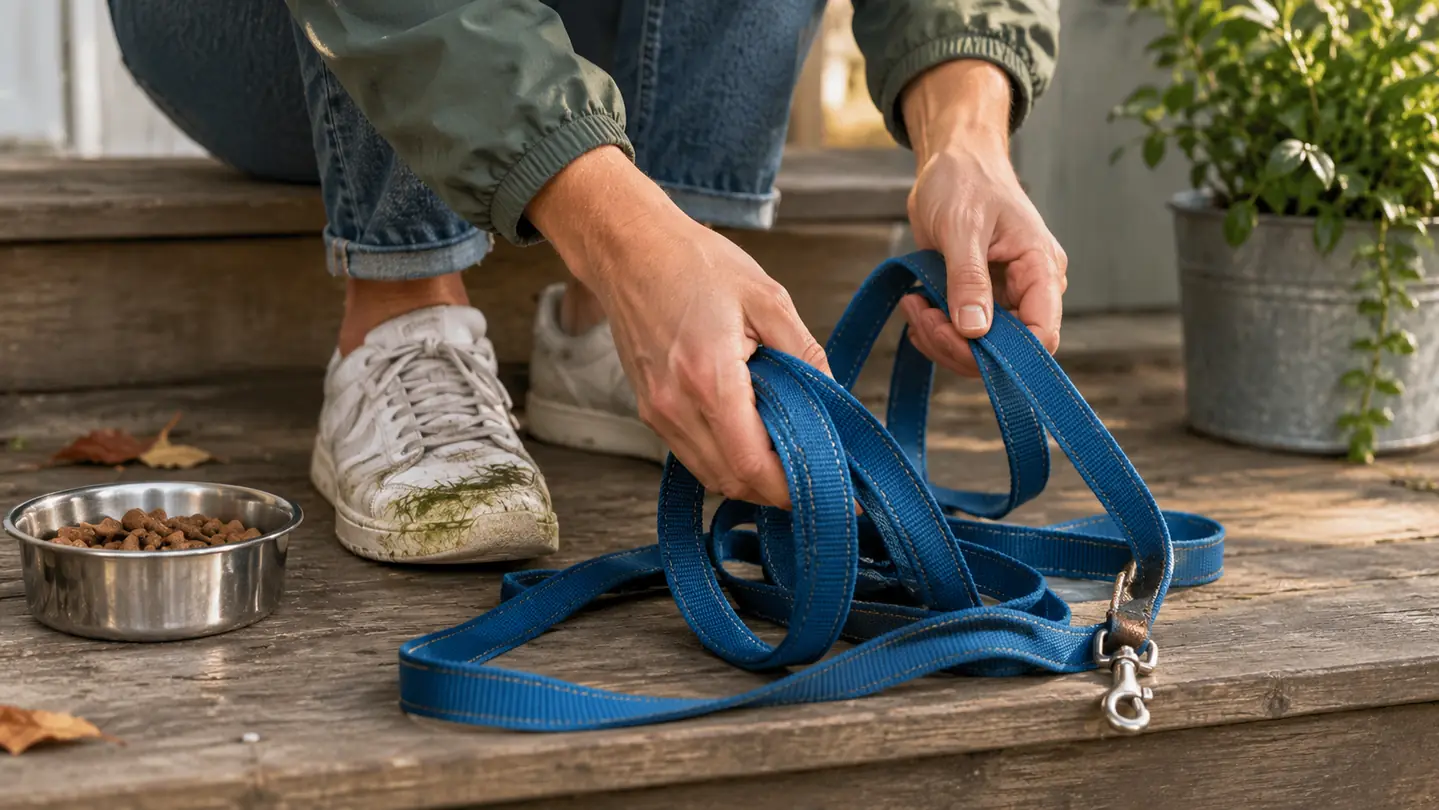
The clip is a swivel style bolt snap, which matters more than it sounds. A long line drags through grass, wraps a shrub, and twists. A swivel resists that twist so the line stays usable and the clip does not load sideways. I have had cheap snaps jam after a week in the yard. This one has not, through months of daily use in Kansas wind.
It turns an open field into a training field
Our yard is fenced, but most of the useful practice happens at the park and in the empty field behind the school where I work. A long line is what makes those spaces usable. I am not off leash, I am not relying on hope, and I still have a physical connection if a rabbit appears. Thirty feet of line is the difference between a risk and a lesson.
Your dog starts checking in on her own
Something I did not teach happened around week three. June began looking back at me unprompted, mid sniff, with slack still in the line. She had learned that checking in was free and sometimes paid. The long lead created that habit by giving her enough room to offer it. If your dog never looks back, they may never have been far enough away to have the option.
It makes fading the equipment a series of steps
Off leash is not the goal for every dog, and I do not treat it casually. But a 30 foot line lets you fade gear in stages. From 30 feet, to 20, to dragging the line, to a short drag, to nothing in a fenced space. Because the behavior was built at distance first, dropping the line does not change the picture for the dog. June's first off leash recall at home did not feel like a gamble.
Ten minutes twice a day is enough to make progress
I train twice a day, about ten minutes each session, because that is what fits around work and supper. A long lead makes those ten minutes count. One session on direction changes, one on a recall from a good sniff. Real distance in short bursts beats a long polite walk with no recall practice in it at all. The gear is not the training. It is what lets the training happen.
None of this is instant. It took roughly six weeks before June would come from the back corner of the yard with the line on and a squirrel nearby. If you are earlier in the process, expect a lot of dull repetitions before anything looks impressive.
What I'd Skip
I would skip the retractable leash for this work. The constant tension teaches a dog to pull against it, and the thin cord is a poor match for an exercise where you want the line to go slack and drag. I would also skip starting with the 50 or 100 foot lengths. Thirty feet is already more room than a medium dog needs in an average yard, and extra line is extra to gather, extra to trip over, and extra to step on wrong.
I would skip grabbing the line while the dog is running. Step on it, or let it run out and then pick it up. And I would skip any session where the line is left dragging with nobody holding the other end. This lead is a tool for supervised practice, not a tie out and not a way to let the dog out alone.
A long lead does not teach your dog to come. It gives you thirty feet of room to reward the moment she turns around.
Start with thirty feet and a pocket of treats
The Hi Kiss training lead comes in 15, 20, 30, 50 and 100 foot lengths. For most yards and most dogs, the 30 foot line is the one that gets used every day.
Amazon Check Today's Price on Amazon →