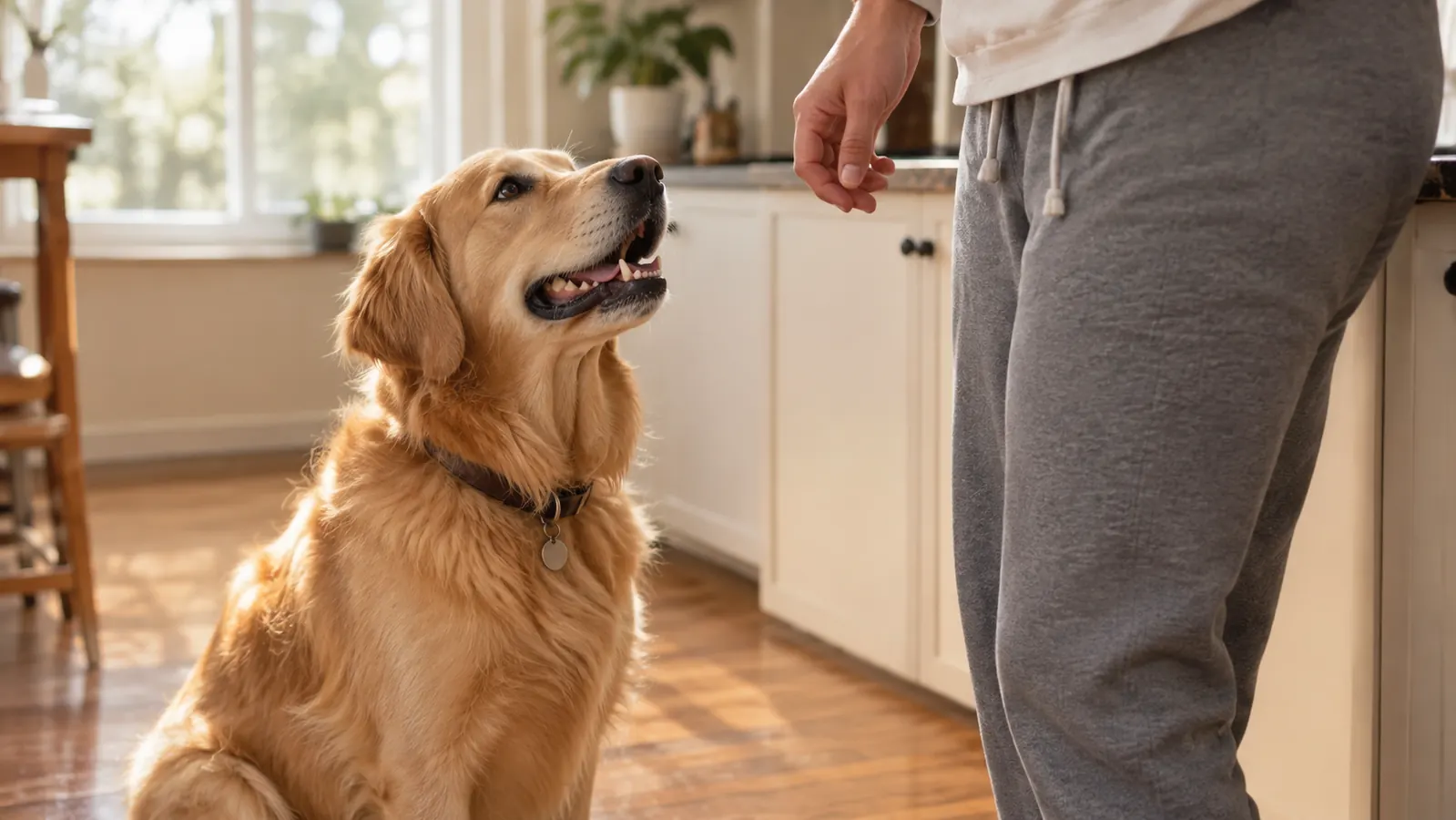
Juniper came to us at 18 months old with three habits I could not talk her out of: pulling hard on the leash, bolting through the front door, and barking at the window every time a truck rolled down our street. For the first few months I did what most people do. I said her name more. I said it louder. I repeated the cue three or four times and then sighed. None of it worked, because I was making noise at a dog who had no idea which part of what she just did had earned the noise. The Starmark clicker was the first tool that made my timing honest.
That is the whole case for clicker training, and the ten reasons below are the specific ways it plays out in a normal house with a normal dog. A clicker does not train the dog for you and it does not fix anything on its own. What it does is mark one instant, precisely, and then you follow that click with food. Do it consistently in two short sessions a day and the dog starts offering the behavior you marked. Here is what changed for June.
The click that finally made my timing honest
One small handheld marker with a stainless steel clicker element, light enough to forget it is in your palm. This is the one I keep on the leash hook by the door.
Amazon Check Today's Price on Amazon →Marks the exact second she got it right
Dogs live about a second and a half in the past. By the time you say good girl, she has moved on to sniffing the baseboard, and now you are rewarding the sniffing. The click closes that gap. It is one sound, delivered in the same instant the behavior happens, and it always means the same thing: food is coming. The first week I used the Starmark clicker on June's sit, I clicked the moment her rear touched the floor and not a beat later. By day three she was offering sits at me in the kitchen like a sales pitch.
Sounds identical every time, so the signal stays clean
Your voice is not a reliable instrument. It changes with your mood, the weather, and whether you slept. A cheerful yes and a yes through your teeth are two different sounds to a dog who is listening closely. A clicker gives you one sound, every repetition, whether you are relaxed or running late for work. That consistency is the entire point. The dog learns one clear signal instead of a dozen variations, and you stop accidentally teaching her that the cue is optional depending on your tone.
Fits in the hand that is already holding the leash
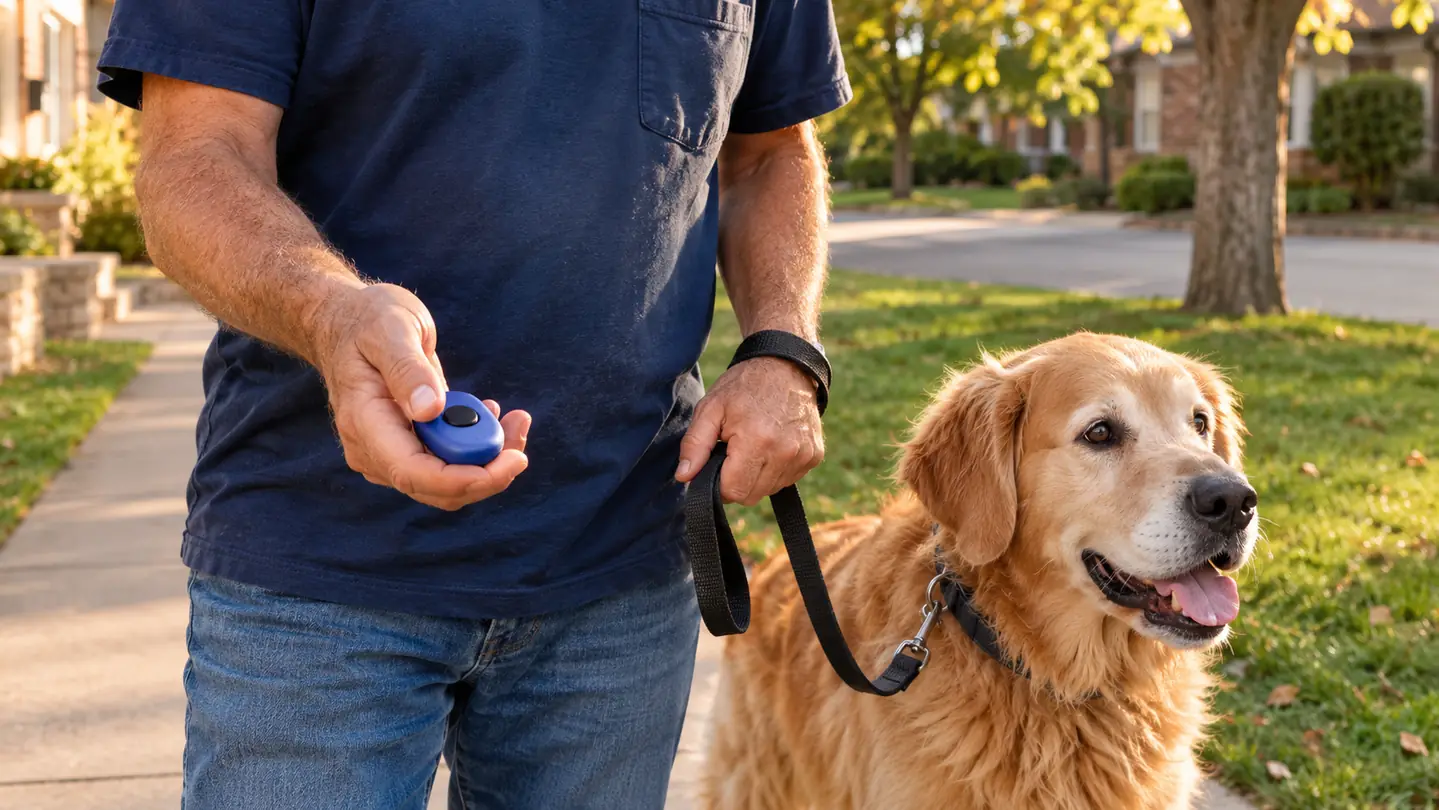
The Starmark clicker is small and light enough that I forget it is in my palm, and the button sits where my thumb already rests. That matters more than it sounds. Most loose-leash training falls apart because you need three hands: one for the leash, one for the treat, one for the marker. With the clicker tucked in my right hand and the leash looped around my wrist, I can mark and reward a loose step without stopping, dropping anything, or letting June drag me into the neighbor's hedge. The ergonomic shape is the reason it stays put.
Makes a ten-minute session feel like a real lesson
I train June for about ten minutes, twice a day, and the clicker gives each session a shape. I pick one behavior, I click maybe fifteen good repetitions, then we stop while she still wants more. Without a marker, ten minutes drifts into vague encouragement and neither of us knows when we finished. With it, there is a clear start, a clear stop, and a record in my head of what got clicked. Two weeks of that beats an hour of unstructured practice on a Saturday, every single time.
Lets you pay for the try, not just the finish
This is where clicker training stopped being obvious to me. June would not hold a stay at the front door, so instead of clicking only a finished stay, I clicked the head turn toward the door. Then I clicked the pause before the lunge. Then the paw going still. Each small piece got marked and paid, and the finished behavior arrived on its own. If you only reward the end result, a dog who cannot get there yet gets nothing to work with. The clicker lets you say yes to the attempt.
Cuts through noise your voice cannot
When a delivery truck rolls past our window, June's brain leaves the room. My voice does not get it back, because my voice is part of the background she has learned to tune out. A click happens right at her shoulder, one short distinct sound, and then food arrives. Within a few weeks I could click the moment she turned her head away from the window and she would come find me instead of barking. The sound does the interrupting. The food does the convincing.
Keeps your timing honest when the moment gets chaotic
Training in a quiet kitchen is easy. Training with the doorbell ringing and a guest on the porch is where timing falls apart, and the clicker drags it back. My thumb can click the instant all four of June's feet stay on the floor, before I have said a word, before I have even fully decided to reward her. That half second is the difference between marking the calm and marking the excitement that came right after it. Consistency in the hard moments is what actually moves a behavior along.
Works on the manners you actually live with
Clicker training is not just for sit and shake. The four things I most needed from June were a loose leash, a wait at the front door, a settle on her mat while I eat, and a reliable come when called. All four got built with clicks and food, one piece at a time, in the same ten-minute blocks. Nothing about the tool is limited to party tricks. It is a way of telling a dog precisely which behavior earned the reward, and that applies to every household rule you care about.
Turns a treat into information instead of a bribe
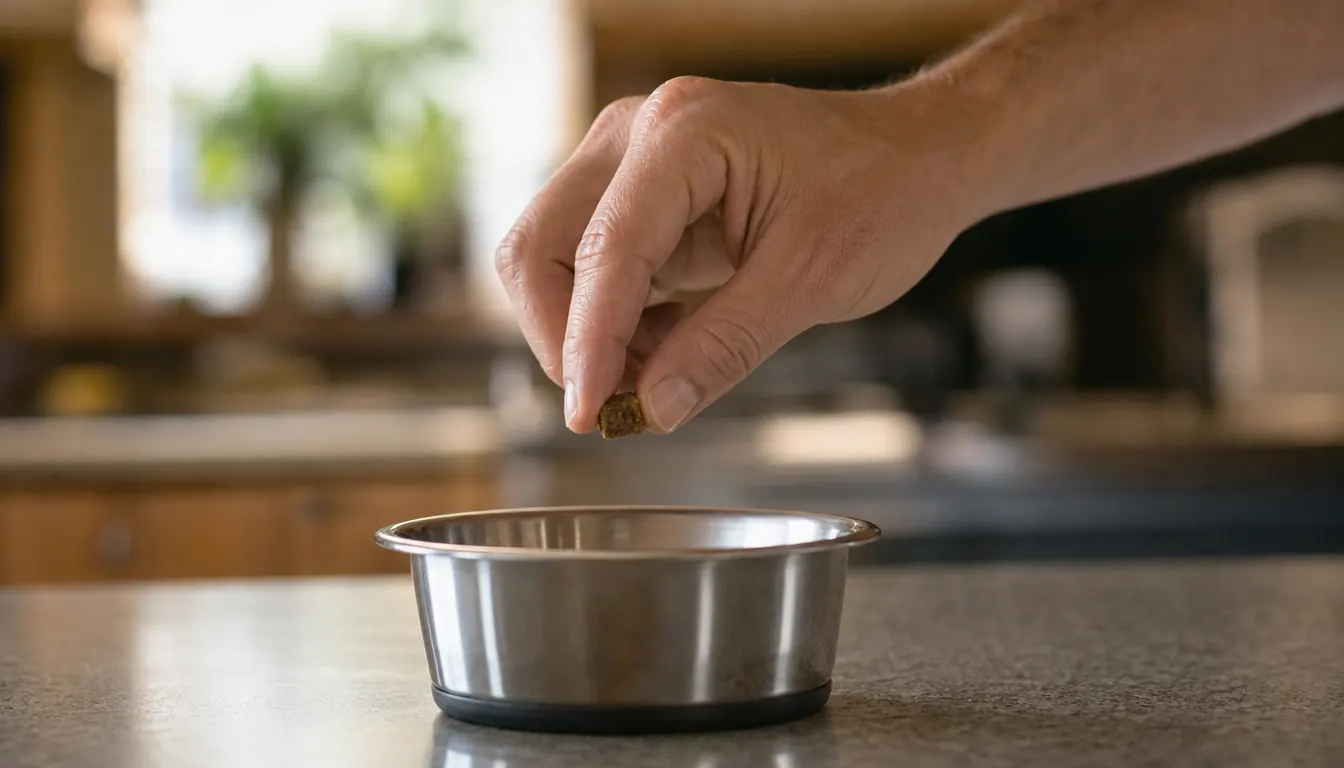
There is a real difference between waving a piece of chicken in front of your dog's nose and paying her after she figures something out. The first teaches her to follow food. The second teaches her to think. When I click, June knows the food is a result of something she just did, not a lure pulling her forward. Months later she still offers sits and settles on her own because the behavior used to pay, not because I am standing there holding a snack in her line of sight.
Clips to your keys, so it is already with you
The best training tool is the one within reach when the dog does something worth marking. The Starmark clicker attaches easily to a keychain, so mine lives on the hook by the back door with the leash. It is water resistant enough to survive a wet walk and light enough that I do not notice it in a jacket pocket. Repetition is what teaches a dog, and I will choose the tool I actually remember to carry over the better tool in a drawer every time.
What I'd Skip
Skip clicker training if nobody in the house is willing to carry food. The click promises a reward every single time, and a marker that does not pay out stops meaning anything within a week. Skip it for a dog who startles at sharp sounds, unless you test the sound from across the room first and pair it with something wonderful. And skip it as a fix for a problem that needs eyes on it, like a sudden change in behavior or aggression, because a clicker is a training tool, not a diagnosis.
I would also skip buying gear instead of doing reps. One clicker, a handful of kibble, and ten honest minutes twice a day will outwork any shelf of gadgets. Juniper is three now and still pulls when a squirrel is involved. The difference is that I can mark the good step and pay for it, and we walk home on a loose leash more often than not.
It took four days, roughly eight minutes a day, before June held a sit at the open front door while I stood there. The click told her exactly which part of that counted.
One small click, one clear answer, ten minutes a day
The Starmark Pro-Training Clicker fits in your palm next to the leash and attaches to a keychain so it is waiting by the door. Food rewards, short sessions, honest timing. That is the whole method.
Amazon Check Today's Price on Amazon →